
 Türkçe
 Français
 Deutsch
The All-on-4 and All-on-6 implant techniques restore a completely edentulous lower or upper jaw with a full fixed prosthesis placed on only four or six implants, respectively. This modern dentistry concept has been developed especially for patients with insufficient bone volume. Thanks to implants placed at specific angles, it is often possible to place the implants and deliver temporary fixed teeth on the same day without the need for advanced surgical procedures. This approach aims to give patients a fast, effective, and aesthetic smile.
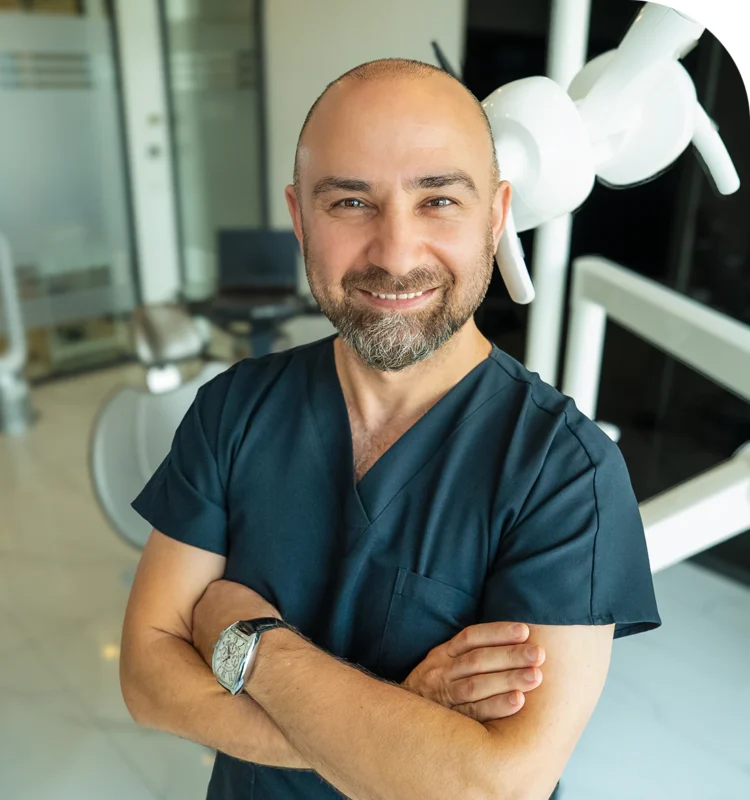
Dr. Dt. Ömer Atar
He completed his primary, secondary, and high school education in Trabzon and graduated from Marmara University Faculty of Dentistry in 2000, where he began his studies in 1994.
Immediately after graduation, he worked in the field of Prosthetic Dentistry at Marmara University, focusing on Metal-Free Aesthetic Systems and Cosmetic Dentistry.
He received his PhD and specialization degree in 2007 for his studies on the application of implants, the construction and control of implant-supported prostheses in patients treated with distraction osteogenesis.
Dr. Ömer ATAR, who closely follows professional innovations, has participated in many seminars and courses both domestically and abroad, and is a member of EDAD (Aesthetic Dentistry Academy Association).
What Is All-on-4 / All-on-6 Implant Treatment?
Imagine that at some point in your life you have lost all your teeth for various reasons, or that your remaining teeth can no longer be saved. This is a challenging situation that deeply affects not only your ability to eat, but also your willingness to smile, to speak with confidence—in short, your entire social life. This is precisely where All-on-4 / All-on-6 comes into play as one of the most impressive solutions modern dentistry offers.
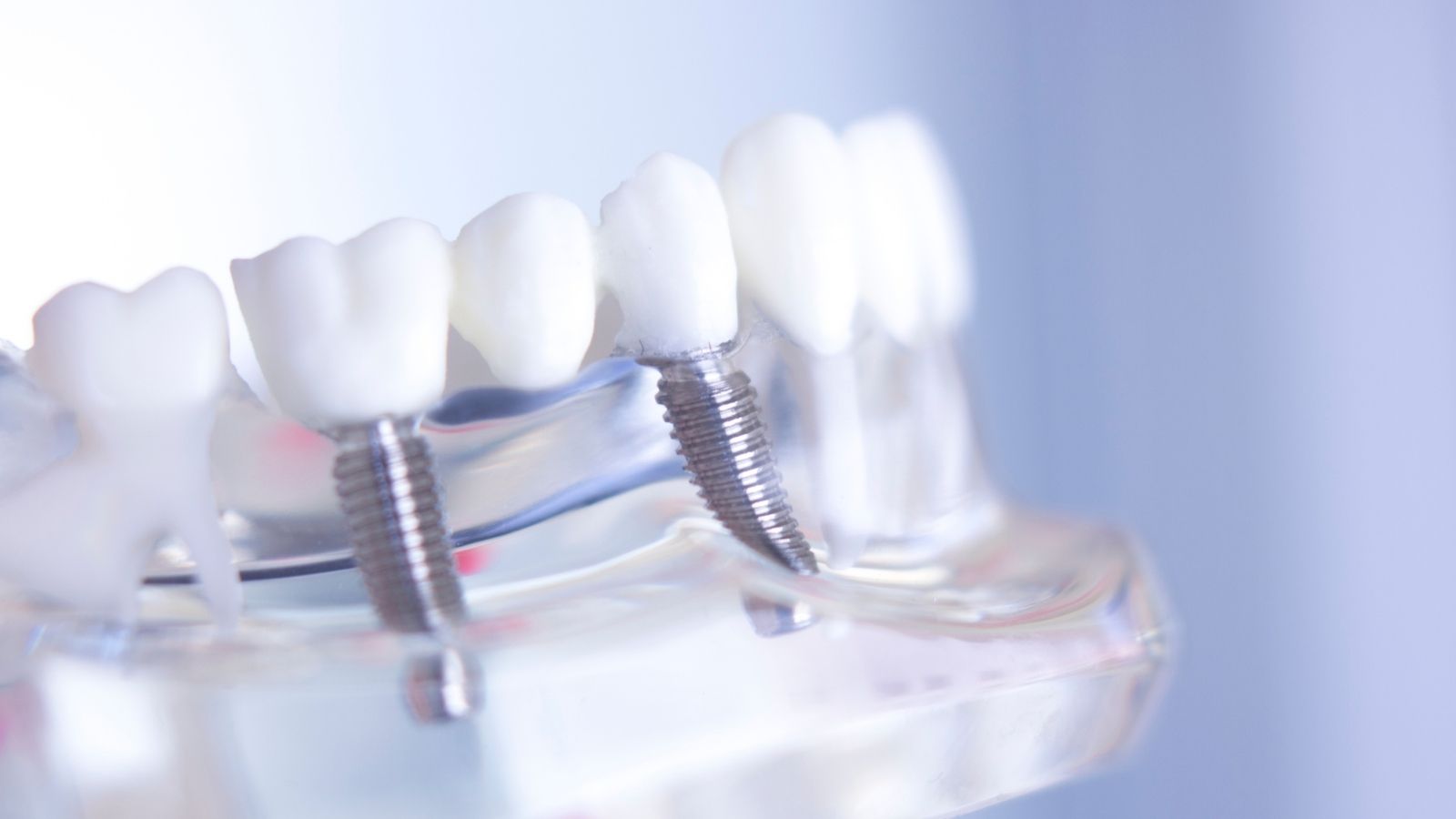
The logic behind this technique is quite ingenious. In the past, restoring a full jaw typically required 8–10 or even more implants, and often additional bone augmentation procedures to reinforce inadequate bone. This would both prolong the process and increase the cost. The All-on-4 concept changes this completely. Two implants are placed vertically in the anterior part of the jaw where the bone is usually strongest. Two more implants are then positioned at specific angles in the posterior regions to avoid anatomically sensitive areas such as nerve canals or sinus cavities. You can think of this like placing the legs of a table angled outward for greater stability; this angulation allows us to take maximum support from the available bone and distribute chewing forces on the prosthesis much more evenly.
The All-on-6 technique works on the same principle but uses six implants instead of four. Especially in cases with lower bone density or where greater chewing support is needed, adding two more implants increases the system’s durability and longevity. Perhaps the most exciting aspect of these treatments is that a fixed temporary prosthesis is attached on the very day of surgery. Thus the patient leaves the clinic with new, fixed teeth and does not have to go through the healing period edentulous or with a removable denture.
Who Is Suitable for All-on-4 / All-on-6 Treatment?
Although this modern treatment method addresses a wide audience, it is virtually tailor-made for certain patient groups. The most suitable candidate profiles generally include:
- Those who have a completely edentulous jaw
- Those whose existing teeth are no longer salvageable
- Those who are uncomfortable using removable (take-in/ take-out) dentures
- Those experiencing issues caused by removable dentures, such as sore spots or loss of taste
- Those who have experienced significant bone resorption in the posterior jaw regions
- Those seeking a fast solution instead of long, multi-visit treatments
- Those who want to achieve fixed teeth with a single surgical procedure
Of course, as with any treatment, there are situations in which this method is not appropriate. For an implant to successfully integrate with bone, overall health must be adequate. For example, uncontrolled diabetes or serious immune system disorders can adversely affect healing. Similarly, heavy smoking is an important factor that reduces the success rate of implants. Therefore, before deciding on treatment, it is essential to conduct a thorough health evaluation and address all risk factors.
What Are the Main Differences from Conventional Implants?
There are several fundamental differences that set the All-on-4 / 6 concept apart from conventional full-arch implant treatments and make it so popular. Understanding these differences will help you grasp why the treatment is so revolutionary.
The most obvious difference is the number of implants used. While it’s a misconception that one implant is needed for every lost tooth, the traditional approach for a full arch often required eight or more implants. All-on-4 / 6 achieves the same, or even better, results with only four or six implants. This brings several important advantages:
- Less surgical intervention
- Shorter operation time
- Faster and more comfortable healing
- Lower overall cost
The second major difference is the reduced need for advanced surgery. In jaws that have been edentulous for years, bone resorption in the posterior regions is inevitable. In classic methods, procedures such as sinus lifting or bone grafting were often necessary to compensate for this deficiency. These additional surgeries extend the total treatment time by 6 to 12 months and carry their own risks. The angled implants of the All-on-4 technique “smartly” avoid these resorbed areas and make use of the available, robust bone. As a result, the vast majority of patients do not need these additional, demanding surgical procedures.
Finally—and perhaps most importantly for the patient—time. In conventional treatments, after implants are placed, several months would have to pass before fixed prostheses could be attached. During this waiting period, the patient would either remain edentulous or cope with removable temporary dentures. With All-on-4 / 6, the “teeth in a day” or “immediate loading” concept eliminates this wait. On the day of surgery, you go home with your new, fixed temporary teeth. This provides not only physical comfort but also tremendous psychological relief and motivation.
Contact us for detailed information and appointments about treatments!
How Is the Decision Made Between All-on-4 and All-on-6?
One of the most common questions patients ask is whether four or six implants are more suitable for them. This is not an arbitrary decision; it is entirely based on scientific data, the patient’s oral anatomy, and biomechanical principles. In appropriate cases, four implants are more than sufficient to support a full arch. However, in some situations, using six implants can be a safer route to ensure long-term success.
Several factors influence the choice of All-on-6:
- Softer bone quality (especially in the upper jaw)
- The need to distribute chewing forces over a wider area
- Presence of bruxism (clenching or grinding)
- A wider arch form
- A desire to add extra security and stability to the system
In particular, the bone quality of the maxilla is more spongy and less dense compared to the mandible. In such cases, increasing the number of implants to six reduces the load on each implant and minimizes risk. In individuals who clench their teeth or have very strong masticatory muscles, six implants help accommodate excessive forces on the prosthesis more healthily. Ultimately, your clinician—who carefully reviews your 3D CBCT scans and evaluates your specific case—will make this decision. The goal is always to offer you the safest, longest-lasting, and most functional solution possible.
How Does the All-on-4 / All-on-6 Treatment Process Progress?
This treatment is like a meticulously planned journey that prioritizes patient comfort and satisfaction from start to finish. Each step is designed to guarantee the success of the next.
- Step 1: Consultation, Planning, and Digital Design
Everything starts with a conversation in which we listen to your expectations and goals. During this first visit, your general health information is obtained and an intraoral examination is performed. Then your 3D cone-beam CT (CBCT)—the foundation of the treatment—is taken. This scan maps your jawbone, showing the thickness and height of the bone and the positions of nerves and sinuses with millimetric precision. Thus, the safest and most ideal sites for implant placement are determined digitally with high accuracy. At this stage, digital impressions of your mouth are also taken, and a smile design can be created to show what your final result will look like—an excellent source of motivation.
- Step 2: The Day of Surgery
Once all planning is complete, surgery day arrives. Contrary to what is often assumed, this procedure is quite comfortable. It is performed under local anesthesia that provides regional numbness, so you will not feel pain during the operation. The surgery is carried out with the help of surgical guides prepared digitally in advance, which act like a navigation system. These guides ensure that the implants are placed at the planned angles and positions, minimizing the margin of error. If there are teeth that need extraction, they are removed in the same session and implants are placed immediately. All of this is typically completed in about 2–3 hours per arch.
- Step 3: Receiving Your Fixed Temporary Teeth the Same Day
This is perhaps the most magical moment. Immediately after the surgery, your prefabricated fixed temporary prosthesis—prepared in the laboratory—is brought in and screwed onto the implants. This prosthesis is aesthetically pleasing and durable enough to provide basic chewing function. When you leave the clinic that day and look in the mirror, what you see will be your new, fixed, beautiful teeth. The days of being edentulous or struggling with a removable denture are over.
- Step 4: Osseointegration and Healing Period
This is the critical phase in which the implants biologically integrate with the jawbone—“osseointegration.” This period typically takes about 3 months in the mandible and 4–6 months in the maxilla, depending on bone quality. During this time, you can comfortably use your temporary teeth; however, to keep the load on the implants under control at first, a softer diet is recommended. Meticulous oral hygiene during this period is vital to the success of the treatment.
- Step 5: Achieving Your Permanent Dream Smile
When the healing process is complete and it is confirmed that the implants have fully integrated with the bone, the final stage begins. Now it’s time to fabricate your definitive prostheses that will accompany you for many years. At this stage, precise impressions are taken again and esthetic try-ins are performed. The final prostheses are made of materials such as zirconia or specially reinforced porcelains, which are both highly durable and highly aesthetic. Tooth shade, form, and the harmony with your gums are carefully fine-tuned. After a few short try-ins, your new, striking prosthesis is fixed onto the implants, and your treatment journey concludes with a magnificent smile.
Contact us for detailed information and appointments about treatments!
What Are the Most Important Advantages of This Treatment?
The popularity of the All-on-4 / 6 technique stems from its many practical and psychological advantages. These benefits directly enhance patients’ quality of life. The main advantages include:
- The possibility of fixed teeth in a single day
- Immediate return to social life and self-confidence
- Often no need for additional surgeries such as bone grafting
- Shorter overall treatment time compared to traditional methods
- More economical due to fewer implants
- Very high success rates proven scientifically
- Elimination of sore spots and discomfort caused by removable dentures
- Preservation of the sense of taste (since the palate is not covered)
- The freedom to eat desired foods with confidence
- Preservation of facial aesthetics by halting jawbone resorption
- Easier cleaning and maintenance compared to removable dentures
How Should Implant Care Be Performed After Treatment?
The period after receiving your new teeth is at least as important as the treatment itself. With proper care, your All-on-4 / 6 implants and prosthesis can serve you for a lifetime. Remember, implants don’t decay, but the bone and gum tissues around them can become inflamed just like around natural teeth. Therefore, a diligent maintenance routine is essential.
Here are important points to consider in your daily care:
- Use a soft-bristled toothbrush
- Brush all prosthesis surfaces at least twice a day
- Use special under-bridge flosses (superfloss) to clean beneath the prosthesis
- Clean around implants with interdental brushes
- Use an oral irrigator (water flosser) to remove food debris under the prosthesis
- Use alcohol-free antibacterial mouth rinses as recommended by your clinician
No matter how good your daily home care is, you should never neglect professional maintenance. At routine check-ups—generally every six months—your prosthesis is removed and both it and the implant components are thoroughly cleaned with special instruments. These visits allow potential issues to be detected and addressed at a very early stage. This simple yet effective maintenance routine is the key to keeping your investment healthy for many years.
Are There Risks to All-on-4 / All-on-6 Treatment?
As with any surgical procedure, All-on-4 / 6 treatment has potential risks. However, with modern technology, detailed planning, and an experienced team, these risks can be minimized. In the spirit of transparency, it is your right to be informed about these possible risks.
Possible risks and complications associated with the treatment include:
- Temporary swelling, bruising, and pain after surgery
- Infection (prevented with antibiotics and proper hygiene)
- Failure of implant–bone integration (osseointegration failure)
- Temporary or permanent numbness due to nerve injury in the mandible (very rare)
- Risk of damage to the sinus cavity in the maxilla (very rare)
- Fractures or cracks that may occur in the prosthesis over time