
 Türkçe
 Français
 Deutsch
Dental implants are artificial tooth roots made of titanium, surgically placed into the jawbone to replace missing teeth. These titanium screws, which are fully compatible with body tissues, biologically integrate with the bone and form an unshakable foundation for porcelain teeth, bridges, or complete dentures to be placed on top. This modern treatment method, which most successfully mimics a natural tooth, restores chewing function and aesthetic appearance while offering a permanent solution without touching the neighboring healthy teeth. Safely applied across a wide spectrum—from single-tooth loss to cases of complete edentulism—this treatment significantly improves quality of life.
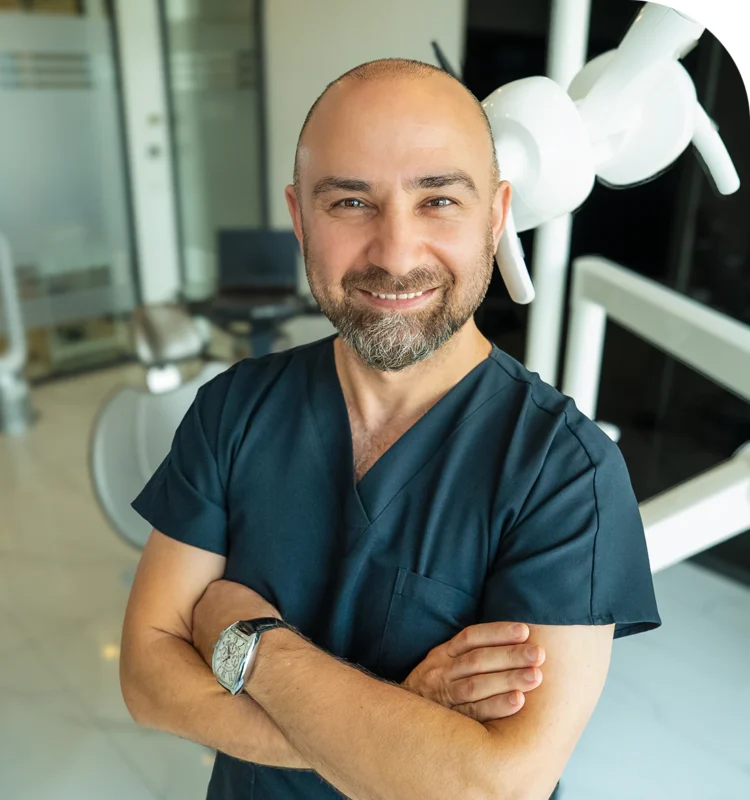
Dr. Dt. Ömer Atar
He completed his primary, secondary, and high school education in Trabzon and graduated from Marmara University Faculty of Dentistry in 2000, where he began his studies in 1994.
Immediately after graduation, he worked in the field of Prosthetic Dentistry at Marmara University, focusing on Metal-Free Aesthetic Systems and Cosmetic Dentistry.
He received his PhD and specialization degree in 2007 for his studies on the application of implants, the construction and control of implant-supported prostheses in patients treated with distraction osteogenesis.
Dr. Ömer ATAR, who closely follows professional innovations, has participated in many seminars and courses both domestically and abroad, and is a member of EDAD (Aesthetic Dentistry Academy Association).
What Is a Dental Implant?
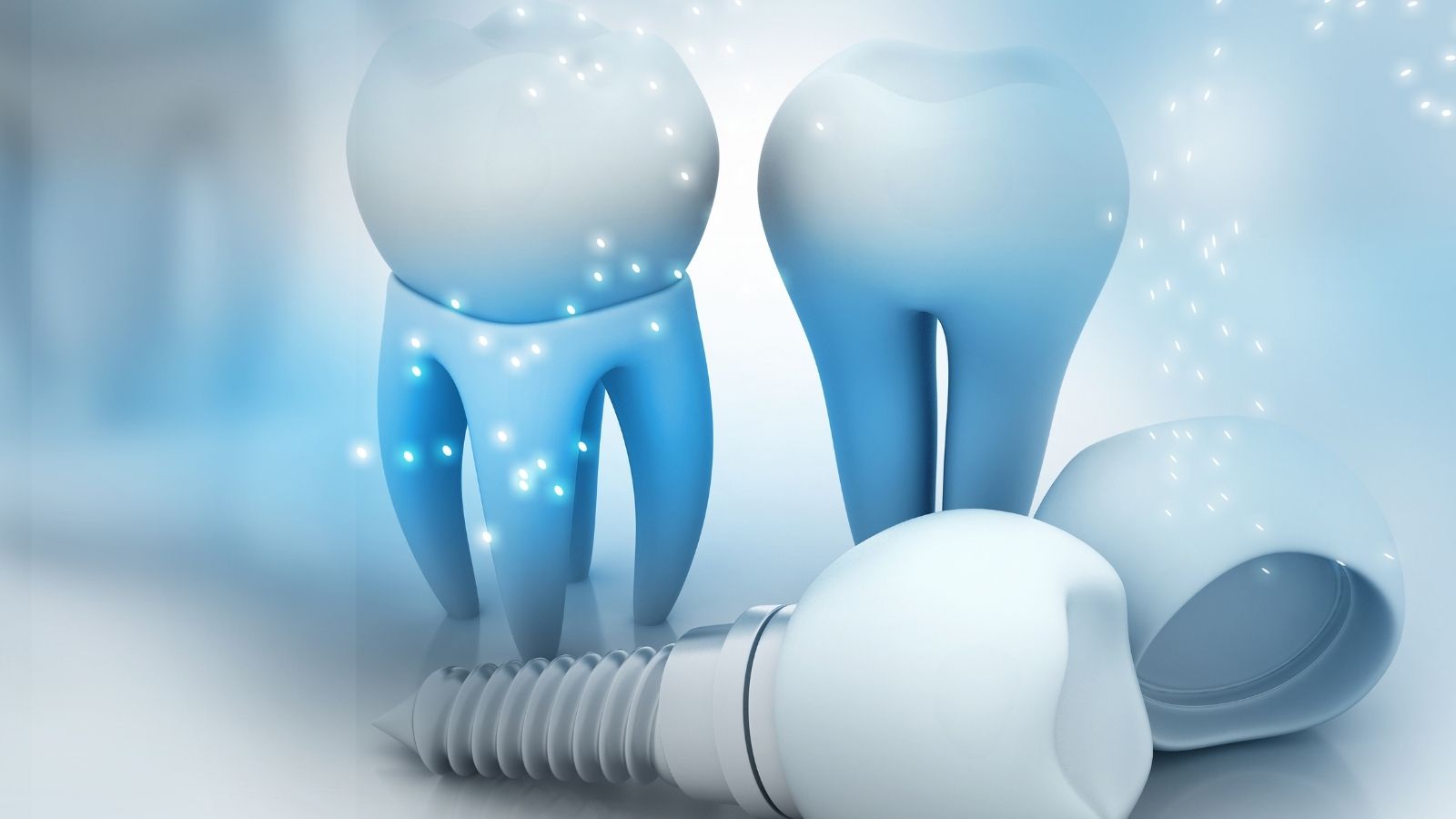
You can think of a dental implant as a sophisticated structure consisting of three main parts. Each of these parts plays a vital role in ensuring the system works flawlessly.
The first part is the implant itself. This titanium component, usually screw-shaped, forms the foundation of the treatment. It is placed into the jawbone through a surgical procedure and mimics the root of the lost tooth. Titanium is a material that is perfectly compatible with the human body, i.e., “biocompatible.” Thanks to this property, bone cells gradually grow toward the specially roughened surface of the implant and virtually fuse with it. This biological integration process ensures that the implant does not move within the jawbone and is stabilized immovably. This solid foundation is the secret behind the prosthesis being able to safely bear all functional loads.
The second part is the intermediary connection element called the “abutment.” This component acts as a bridge between the implant in the bone and the visible porcelain tooth in the mouth. After the implant has completely fused with the bone, it is placed just above the gum and secured to the implant with a small screw. By creating a stable platform on which the porcelain tooth will sit, the abutment transfers the implant’s load-bearing strength to the superstructure.
The third and final part is the crown, i.e., the porcelain tooth. This is the visible, aesthetic part of the treatment. It is carefully fabricated in the laboratory by dental technicians to match the color, shape, and size of the patient’s other teeth exactly. It is produced from materials such as porcelain or zirconium that are both highly durable and very close to the natural tooth in terms of aesthetics. The prepared crown is fixed onto the abutment by bonding or screwing. In this way, chewing function is fully restored while achieving an appearance that is almost indistinguishable from natural teeth.
Why Are Implants Necessary After Tooth Loss?
The loss of a tooth does not merely create an empty space in the mouth; over time it triggers a series of chain reactions that affect overall oral health. Implant treatment aims to prevent these adverse effects and preserve oral integrity.
One of the most important duties of tooth roots is to transmit the forces generated during chewing to the jawbone, keeping the bone active and healthy. When a tooth is lost, the bone tissue in that area no longer receives this natural stimulus. Just like an unused muscle weakens over time, the jawbone starts to resorb and lose volume in that region. This bone resorption not only makes future implant treatment more difficult but also impairs the facial aesthetic structure. It can cause depressions in the cheeks and lips, alter the facial profile, and make the person appear older. Implants act like natural tooth roots, transmitting chewing forces to the bone and halting this resorption process.
Moreover, teeth contact each other to form a balanced arch. When one tooth is missing from this arch, the neighboring teeth begin to tip into the space, and the opposing tooth starts to over-erupt toward the gap. This disrupts the ideal alignment of the teeth, causes crowding, facilitates the accumulation of food debris (increasing the risk of decay), and completely alters the chewing pattern. By filling this gap, an implant preserves the positions of neighboring teeth and prevents disruption of the jaw’s balance.
Who Is a Good Candidate for Implant Treatment?
Although implant treatment is a highly successful method, it may not be suitable for everyone. To guarantee the success of the treatment, it is important that the patient meets certain criteria. There are basic characteristics required to be a good implant candidate.
- Good general health status
- Completed jaw and bone development
- Adequate jawbone volume to support the implant
- Healthy, well-maintained gums
- Good oral hygiene habits
- Motivation to comply with the treatment process
Some conditions may jeopardize implant treatment or require additional precautions. For example, uncontrolled diabetes can negatively affect the healing process and increase the risk of infection. Therefore, regulating blood glucose levels before starting treatment is of critical importance. Similarly, heavy smoking reduces blood circulation inside the mouth, making it more difficult for the implant to fuse with the bone and increasing the long-term risk of implant loss. Patients considering implant treatment are strongly advised to quit smoking or at least refrain during the pre- and postoperative periods. In addition, patients who use certain medications that affect bone structure (such as bisphosphonates) or who have received radiotherapy to the head and neck region should have their situations evaluated in detail before treatment.
Contact us for detailed information and appointments about treatments!
How Does the Implant Treatment Process Progress Step by Step?
Implant treatment is not a procedure that is completed in a single session. It is a process consisting of successive stages that require patience and care to achieve a successful outcome.
First and foremost, a detailed examination and planning are performed. This stage is the cornerstone of the treatment and the key to success. The patient’s medical history is taken and an intraoral examination is conducted. Then, advanced imaging methods such as panoramic X-rays and especially three-dimensional (3D) dental tomography are used. Tomography allows us to see the height, width, and quality of the jawbone with millimetric precision. It also helps us clearly determine the positions of important anatomical structures in the implant site such as nerves, blood vessels, and sinus cavities. In light of these data, the size and type of implant to be used, as well as where and at what angle it will be placed, are planned virtually. This meticulous planning makes the operation much safer and much faster.
After planning is complete, the surgical phase begins. This procedure is usually performed under local anesthesia, meaning only the area to be operated on is numbed. Thus, the patient does not feel any pain during the procedure. Once the area is completely numb, a small incision is made in the gum to access the jawbone. Then, using special instruments, a socket matching the dimensions of the implant is prepared in the bone. After the implant is carefully placed into this socket, the gum is closed with sutures. Placing a single implant is typically completed in as little as 20–30 minutes and is, for most patients, a more comfortable experience than a simple tooth extraction.
After the surgical procedure, the healing phase— the most critical period of the treatment—begins. During this period, a biological bond forms between the implant surface and the surrounding bone cells; in other words, the implant fuses to the bone. This osseointegration process may take about 2–3 months in the lower jaw and 3–6 months in the upper jaw, where the bone structure is more spongy. During this waiting period, temporary prostheses can be used to ensure aesthetics and function so that patients are not left without teeth.
When the healing process is complete and full integration of the implant with the bone is confirmed by X-ray, the prosthetic phase begins. At this stage, the intermediary part called the “abutment” is attached to the implant. Then precise impressions are taken from the mouth to fabricate the porcelain crown, bridge, or denture to be placed on top. The definitive prostheses prepared in the laboratory according to these impressions are fixed onto the abutment by screwing or bonding after try-ins that may take a few sessions. With this final stage, the patient attains new teeth that are both healthy and aesthetic.
Is There Pain During and After the Implant Operation?
One of the biggest concerns patients have about implant treatment is whether the operation will be painful. While this concern is very understandable, it is generally unfounded thanks to modern anesthesia techniques. During the operation, the area to be treated is completely numbed with local anesthesia, so the patient absolutely does not feel pain. The only sensation is a slight vibration and pressure from the instruments working.
After the operation, when the effect of anesthesia begins to wear off, it is normal to experience mild soreness or discomfort. However, this is often no more severe than what is felt after a simple tooth extraction. The standard painkillers your physician prescribes for the postoperative period will be sufficient to get you through this phase quite comfortably. Mild swelling or bruising on the cheek may also be seen in the first 1–2 days at the operation site. This is a normal response of the body’s healing process and is not a cause for concern. Applying ice compresses externally to the area at intervals during the first 24 hours after the operation greatly helps control swelling and bruising. Most patients can comfortably return to their normal daily lives the day after surgery.
How Long Do Implants Last with Proper Care?
Implant treatment is not a temporary fix but a long-term investment. An implant that has been properly planned and placed by a specialist and, most importantly, is cared for diligently by the patient can remain in the mouth for a lifetime. Since the implant itself is made of a highly durable material such as titanium, it does not decay, rust, or wear out.
However, the main factor determining the longevity of an implant is not the implant itself, but the health of the surrounding bone and gum tissues. As with natural teeth, bacterial plaque can accumulate around implants due to inadequate oral hygiene. If this plaque is not removed, it leads to inflammation of the gums. If this condition progresses, it can turn into a serious infection called “peri-implantitis,” which causes resorption of the bone supporting the implant. An implant that loses its bony support begins to loosen over time and may eventually be lost. Therefore, the long life of implants depends entirely on regular and effective oral care and periodic dental check-ups.
Contact us for detailed information and appointments about treatments!
What Should Be Considered in Implant Care?
To keep your implants healthy for a lifetime, you need to apply even more meticulous care than for your natural teeth. The main goal of this care is to prevent the accumulation of bacterial plaque in the areas where the implant and gum meet. There are some important points you should pay attention to.
- Use of a soft or extra-soft bristled toothbrush
- Dental floss specially designed for implants (superfloss)
- Interdental brushes
- Oral irrigator (water flosser)
- Toothpastes without abrasive content
- Regular professional dental check-ups every six months
What Are the Advantages of Dental Implants Compared to Traditional Methods?
In the treatment of tooth deficiencies, implants offer many advantages over traditional bridges and removable dentures and are considered the “gold standard” treatment method today. Among the main advantages are the following key points.
- Preservation of neighboring teeth
- Maintenance of jawbone health
- Function and chewing efficiency closest to natural teeth
- Superior and natural aesthetic appearance
- A long-lasting and permanent solution
- High user comfort and increased self-confidence
In the fabrication of a traditional bridge prosthesis, to close the gap created by the missing tooth, the healthy neighboring teeth on both sides of the gap must be reduced, i.e., cut and prepared. This means irreversibly sacrificing sound tooth structure. In implant treatment, however, the neighboring teeth are not touched in any way. An implant is placed only in the missing area as an independent structure.
Removable (denture) prostheses and bridges cannot prevent bone resorption because they do not transmit sufficient pressure to the underlying jawbone. Implants, on the other hand, transmit chewing forces directly to the jawbone, keeping the bone vital and healthy, which helps preserve facial aesthetics.
Since implant-supported prostheses are fixed to the jawbone, they do not cause problems such as moving, sore spots, or interference with taste perception like removable prostheses. They offer chewing force and comfort as if they were the person’s own natural teeth. Thus, patients can comfortably eat whatever they wish without dietary restrictions.
What Are the Possible Risks in Implant Treatment?
As with any surgical procedure, there is a certain risk factor in implant treatment. However, it should be remembered that with correct planning and application, the success rate of this treatment reaches up to 98%. In an implant operation performed by an experienced physician under sterile conditions, the risk of complications is extremely low. Nevertheless, there are some possible risks that patients should be aware of:
- Development of infection at the operation site
- Temporary or permanent numbness due to nerve damage in the lower jaw
- Damage to the sinus cavity in the upper jaw
- Insufficient fusion of the implant with the bone (failure of osseointegration)
- Postoperative bleeding or excessive swelling
The vast majority of these risks can be minimized thanks to detailed three-dimensional tomography examinations performed before the operation. For example, by determining the exact location of nerves and sinus cavities with tomography, implants are placed at a safe distance from these sensitive areas. The risk of infection is controlled by the sterile environment provided during the operation and the antibiotics to be used afterward.
Can Implants Be Placed If the Jawbone Is Inadequate?
Yes, there is hope today even for patients with insufficient jawbone volume. Thanks to advanced surgical techniques, it is possible to create new bone in the area where the implant will be placed and make these patients suitable candidates for implant treatment.
One of the most commonly used methods is “bone grafting,” popularly known as “bone powder.” In this procedure, biocompatible bone particles—derived from human or animal sources or produced synthetically—are added to the area where the bone is insufficient. These particles serve as a scaffold for the proliferation of the body’s own bone cells. Over time, the body fills this region with its own healthy bone tissue and creates a new bone area of sufficient volume and density to allow implant placement.
Especially in the posterior regions of the upper jaw, due to the descent of the sinus cavities after the loss of molar teeth, there may not be sufficient vertical bone height for implants. In this case, a “sinus lifting” (sinus augmentation) operation is performed. In this procedure, the membrane forming the floor of the sinus is gently lifted upward, and the created space is filled with bone grafts. In this way, a new bone height is obtained where the implant can be placed safely. Although these advanced surgical techniques slightly prolong the treatment time, they enable many patients who previously had no chance for implants to attain stable and comfortable teeth.
What Implant Solutions Exist for Those Who Have Lost All Their Teeth?
For patients who have lost all their teeth, traditional removable (denture) prostheses can cause serious problems—especially in the lower jaw—such as lack of retention, constant movement, sore spots, and difficulty chewing. Implant technology offers excellent solutions that completely change the quality of life for these patients.
The first of these is “implant-supported fixed prostheses.” In this concept, also known as “All-on-4” or “All-on-6,” a complete bridge prosthesis containing all the teeth in that jaw is screwed onto 4 or 6 implants strategically placed in a single jaw. These prostheses cannot be removed by the patient. They remain fixed just like natural teeth and provide very strong chewing function. Patients not only gain an aesthetic smile but also the joy of being able to eat whatever they want freely.
A more economical alternative is “implant-supported removable prostheses.” In this system, popularly known as “snap-on dentures,” fewer implants are placed in the jaw (usually 2 in the lower jaw and 4 in the upper jaw). Ball-shaped or bar-shaped attachments are placed on these implants, which fit into the sockets inside the prosthesis. The prosthesis snaps onto these attachments like a “snap,” becoming fixed. Although the prosthesis can still be removed by the patient for cleaning, it does not move in the mouth thanks to the implants, becomes highly stable, and its chewing efficiency increases many times compared to conventional dentures.
Does the Choice of Implant Brand Affect the Treatment?
Yes, it definitely does. Although there are many different implant brands on the market, not all of them are of the same quality and reliability. For the long-term success of the treatment, the brand of implant used and the scientific support behind it are very important.
Established and globally recognized implant companies back their products with decades of scientific research, clinical follow-up studies involving thousands of cases, and substantial R&D investments. Technical details such as the method of roughening the implant surface, the design of the thread grooves, and the type of connection between the implant and the abutment directly affect how quickly and firmly the implant fuses with the bone and how well it preserves the surrounding bone tissue in the long term. Using an implant brand with proven success and long-term results supported by scientific publications increases the longevity and success of the treatment. In addition, choosing an established brand ensures that compatible components for that implant can be found in the future (even 15–20 years later) if any modification or repair of the prosthesis is required.
What Factors Influence the Cost of Implant Treatment?
The cost of implant treatment is not standard and is determined individually according to the patient’s needs. There are many different factors that affect the total cost.
- Total number of implants to be used in the treatment
- Brand and origin of the chosen implant
- Type of prosthesis to be placed on the implant (single crown, bridge, full-arch prosthesis)
- Material to be used in prosthesis fabrication (metal-supported porcelain, zirconium)
- Whether additional surgical procedures such as bone grafting or sinus lifting are required
- Experience of the practitioner and the clinic’s technological equipment