
 Türkçe
 Français
 Deutsch
Full-mouth dental treatment is a comprehensive treatment protocol that resolves aesthetic and functional problems in the mouth with a holistic approach. This process goes beyond repairing worn, discolored, or lost teeth and addresses chewing habits, temporomandibular joint (TMJ) health, and smile aesthetics as a whole. Personalized plans offered by modern dentistry rebuild oral health from the ground up, providing functional improvement while creating aesthetically satisfying, long-lasting results. The aim is not only to eliminate problems, but to establish an ideal intraoral balance and harmony.
Dr. Dt. Ömer Atar
He completed his primary, secondary, and high school education in Trabzon and graduated from Marmara University Faculty of Dentistry in 2000, where he began his studies in 1994.
Immediately after graduation, he worked in the field of Prosthetic Dentistry at Marmara University, focusing on Metal-Free Aesthetic Systems and Cosmetic Dentistry.
He received his PhD and specialization degree in 2007 for his studies on the application of implants, the construction and control of implant-supported prostheses in patients treated with distraction osteogenesis.
Dr. Ömer ATAR, who closely follows professional innovations, has participated in many seminars and courses both domestically and abroad, and is a member of EDAD (Aesthetic Dentistry Academy Association).
Who needs “Full-Mouth Dental Treatment”?
Sometimes our patients say, “Only one of my teeth hurts,” or “I just want my front teeth fixed.” However, the problem may lie far deeper than what is visible, and treating a single tooth can be like plugging a small hole in a sinking ship; it does not solve the real issue. This is where the full-mouth treatment approach—which sees the big picture and evaluates the mouth as a whole—comes into play. This comprehensive treatment is often a necessity for people with certain conditions.
The patient profiles that most commonly need this treatment are:
- Those who have lost many teeth for various reasons
- Those with advanced tooth wear due to clenching/grinding or acid erosion
- Those experiencing advanced gum disease that causes tooth mobility and bone loss
- Those with widespread and untreated decay throughout the mouth
- Those with severe malocclusions that negatively affect chewing and the TMJ
- Those dissatisfied with their current restorations (crowns, bridges) and seeking a holistic change
- Those who have suffered widespread damage to the teeth and jaw structure due to trauma
- Those with comprehensive and holistic aesthetic expectations
If one or more of these situations apply to you, seeking a holistic solution rather than postponing problems will be the right step to take for your long-term health and quality of life.
How is full-mouth dental treatment planned?
The secret of a successful full-mouth treatment lies unequivocally in flawless planning. This stage is like an architect drawing up a building project; every detail must be considered down to the finest point, and the harmony of each step with the next must be calculated. Planning that is rushed or based on incomplete data can lead to problems that are difficult to reverse later. Therefore, a comprehensive diagnostic and analysis process is carried out before treatment begins. This process allows the clinician to understand your oral structure and draw up the most suitable roadmap for you.
There are key steps in this critical planning process:
- Detailed Clinical Examination: Each tooth’s condition, the fit of existing fillings and crowns, gum health, pocket depths, and soft tissues such as the tongue and cheeks are carefully examined.
- Radiographic Imaging: To detect issues that cannot be seen with the naked eye, panoramic X-rays are taken and, if necessary, dental tomography (CBCT) for 3D analysis of bone density or implant planning. These images show tooth roots, impacted teeth, and the health of the jawbone.
- Intraoral Digital Scans or Impressions: Modern scanners are used to create a three-dimensional digital model of your mouth, or traditional impression trays are used. These models form the basis for occlusal analysis and prosthetic design.
- Pretreatment Photography: Both intraoral and facial photographs are taken to document the current situation. These photographs play an important role in the smile design process and in comparing treatment results.
- Evaluation of the TMJ and Masticatory Muscles: Especially in patients who clench/grind or have joint pain, the condition of the temporomandibular joint (TMJ) and the chewing muscles is analyzed in detail.
After all these data are collected, your clinician prepares a personalized treatment plan by taking into account your aesthetic expectations, functional needs, and lifestyle. This plan is a transparent roadmap that includes which treatments will be performed, in what order, and the estimated duration and cost. Once full agreement is reached with you on this roadmap, the treatment journey begins with confidence.
Contact us for detailed information and appointments about treatments!
Which dental treatment methods are used in full-mouth restoration?
Full-mouth dental treatment is not a single magic wand; rather, it is a symphony of many different dental specialties working together. Depending on the individual’s needs, the “instruments” in this symphony—that is, the treatment methods—vary. Planning determines which of these methods will be applied, when, and how.
Here are some fundamental methods frequently used in this comprehensive treatment.
Treatments that Improve Gum Health
Without a solid foundation, nothing can be built upon it. The foundation of oral health is healthy gums.
- Scaling (tartar removal)
- Root planing (curettage)
- Periodontal surgical interventions such as flap surgery for advanced cases
Restorations that Repair Lost Tooth Structure
These aim to restore decayed or fractured teeth to their original form and function.
- Composite fillings
- Porcelain inlays and onlays for large substance loss
- Full-coverage crowns that encase and protect the tooth
Solutions that Replace Missing Teeth
For both aesthetics and chewing function, missing teeth must be replaced.
- Dental implants—the most modern and healthy solution
- Implant-supported bridges for multiple missing teeth
- Conventional bridges supported by neighboring teeth
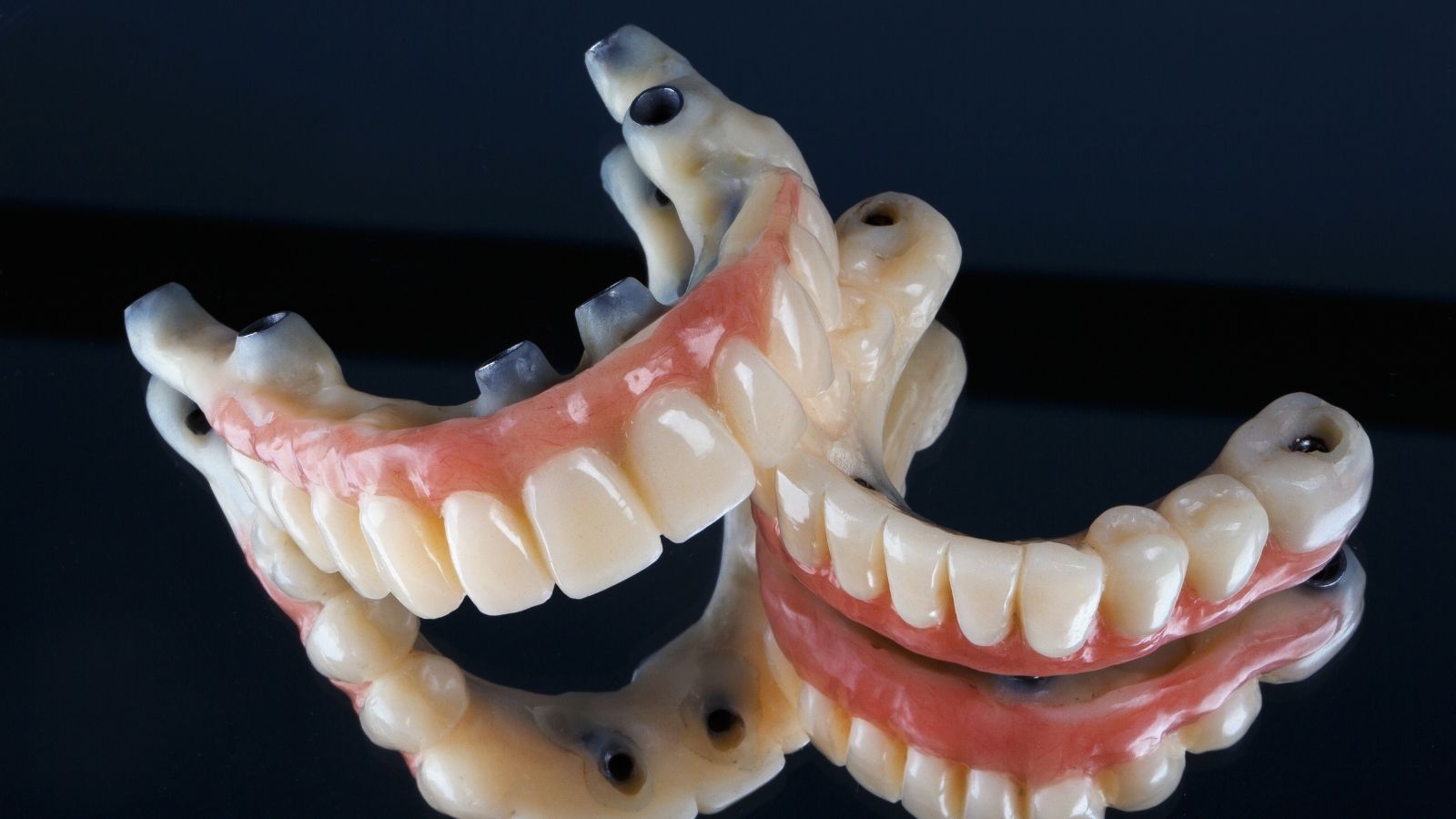
- All-on-4 / All-on-6 systems for fully edentulous patients
- Removable dentures with precision attachments
Treatments that Save Tooth Vitality
The most effective way to save a tooth that would otherwise be extracted is root canal treatment.
- Root canal treatment (Endodontics)
Treatments that Correct the Teeth and the Bite
Teeth may need to be moved to ideal positions before restorations.
- Orthodontic treatment (braces or clear aligners)
Surgical Procedures that Prepare the Ground for Implants and Prostheses
These are important steps that prepare the mouth for advanced treatments.
- Extraction of teeth that cannot be saved
- Bone augmentation (grafting) to increase insufficient bone volume
- Sinus lifting for the posterior maxilla
Esthetic Touches that Beautify the Smile
These are the final touches that perfect aesthetics after functional treatments are completed.
- Teeth whitening (bleaching)
- Porcelain laminates (laminate veneers) for the front teeth
- Pink aesthetics to adjust gum levels (gingivectomy)
Which of these treatments are suitable for you is determined as a result of detailed examinations and analyses and is included in your personalized treatment plan.
How long does full-mouth dental treatment take?
“How long will my treatment take?” is naturally the most common question during the planning stage. However, there is no single answer that applies to everyone. The process is entirely personalized and varies greatly depending on the nature and number of procedures to be performed. While some treatments can be completed in a few months, plans involving more complex procedures such as implant surgery and orthodontics commonly exceed one year. It should be remembered that the goal is not to finish quickly, but to achieve the healthiest and most permanent result by respecting biological healing times.
The main factors affecting treatment duration include:
- The overall complexity of the treatment plan
- Healing periods of the bone after extractions and implant surgery
- The osseointegration period—how long implants fuse with the jawbone
- Whether orthodontic treatment (braces/aligners) is required
- Laboratory phases for the fabrication of crowns, bridges, and dentures
- The patient’s compliance with attending scheduled appointments
- Maintaining ideal oral hygiene throughout the treatment
When presenting your treatment plan, your clinician will share how long each stage will take and the projected timeline for the overall treatment. Being patient and following your clinician’s guidance play a key role in the success of the treatment.
Is the treatment process painful?
In modern dentistry, “pain” is no longer something to fear. Even in comprehensive processes such as full-mouth treatment, patient comfort is always prioritized. All procedures performed during treatment—such as tooth preparation, root canal therapy, or implant surgery—are carried out under potent and effective local anesthetics that completely numb the area. In this way, you do not feel any pain during the procedure.
Of course, once the anesthesia wears off after procedures, it is normal to experience some sensitivity, mild soreness, or swelling. As a natural part of the healing process, these discomforts are typically easy to control with simple painkillers recommended by your clinician. Depending on the extent of the procedure, this may last from a few hours to a few days.
For patients who have intense fear or anxiety about the dental chair, additional comfort options such as sedation are also available. Conscious sedation allows the patient to undergo treatment in a relaxed, lightly drowsy state. Especially during long sessions or surgical procedures, this method provides great comfort for both the patient and the clinician. In short, all modern means are utilized to ensure the treatment process is painless and as comfortable as possible.
Contact us for detailed information and appointments about treatments!
How is the cost of full-mouth dental treatment determined?
Full-mouth dental treatment is like a tailor making a bespoke suit; since every person’s measurements and preferences are different, it is not possible to speak of a standard price. The cost is shaped entirely by the content of the personalized treatment plan prepared for you. Therefore, the fee paid by a friend or relative does not provide a reference for your own treatment. Transparency is the most important part of this process, and you should clearly know all financial details before starting treatment.
The key factors that determine the total cost of treatment are:
- The number and type of procedures included in the plan (implants, crowns, root canal treatments, etc.)
- The quality and brand of the materials used in restorations (for example, implant brand, zirconia or E-max porcelain type)
- The involvement of different specialist clinicians such as a periodontist, orthodontist, or oral and maxillofacial surgeon
- The use of advanced diagnostic and treatment technologies such as CBCT or digital scanners
- The technical equipment and standards of the dental laboratory that will fabricate your prostheses
After your detailed examination and analyses are completed, your clinician will provide you with a comprehensive breakdown that includes all treatments to be performed, alternatives, and the cost of each. You can then ask all your questions and evaluate payment options that best fit your budget. Remember, this treatment is an important investment in your future oral health and quality of life.
How can you extend the longevity of the completed dental treatment?
Once full-mouth dental treatment is completed, the clinician’s role largely ends and the main responsibility passes to the patient. From this point on, the most important factor determining the lifespan of the restorations is how well you care for them. Even the most luxurious car will wear out quickly if not maintained regularly. Likewise, preserving the outcomes of this treatment—completed with great effort and cost—rests in your hands. To enjoy your new smile for many years without problems, you need to make certain habits a part of your life.
Here are the golden rules to protect this valuable investment:
- Brush effectively and regularly at least twice a day using the correct technique
- Always use dental floss and interdental brushes to clean around crowns, bridges, and implants
- Use an oral irrigator (water flosser) to clean hard-to-reach areas
- Attend professional dental check-ups every six months or annually as determined by your clinician
- If you clench or grind, use a night guard to protect your restorations
- Avoid cracking very hard objects such as nuts or ice with your teeth, and avoid opening packages with your teeth
- Follow a balanced diet that limits sugary and acidic foods
- Avoid smoking and tobacco products, which negatively affect teeth and gum health
As long as you follow these simple yet effective rules, the results of your treatment will remain healthy and aesthetic for years, just like on the first day.
What are the benefits of starting full-mouth dental treatment?
Deciding to undergo comprehensive full-mouth dental treatment can be one of the most transformative choices you make. This process offers far more than simply replacing missing teeth or addressing an aesthetic concern. It is a holistic investment that enhances your quality of life in many ways, improving you both physically and psychologically. The gains you achieve when the treatment is complete will be the best reward for the patience and effort you show throughout the process.
Here are the main advantages of embarking on this important treatment journey:
- Improved chewing and speech function for better food processing
- Enhanced digestive health thanks to better chewing
- Elimination of intraoral infections and inflammations that pose a constant threat to the body
- Positive effects on overall systemic health as oral health improves
- A renewed appearance with a natural, healthy, and aesthetic smile
- High self-confidence and social ease that come with being able to smile comfortably in public
- A long-lasting, permanent solution instead of constantly “patching up” problems
- Relief of TMJ disorders and related headaches as the bite is corrected
- A younger and more dynamic facial expression