
 Türkçe
 Français
 Deutsch
Laminate veneers are thin porcelain layers custom-designed and applied to the front surfaces of teeth to correct aesthetic imperfections such as color, shape, and size. This method, one of the cornerstones of smile-design applications, is also known as “porcelain veneers” or “leaf porcelain.” The main goal of this treatment is to achieve an aesthetic and natural-looking smile with highly light-transmitting materials while minimizing intervention to the natural tooth structure. Thanks to the principle of minimal abrasion, the original structure of the tooth is largely preserved while providing an aesthetic transformation.
Dr. Dt. Ömer Atar
He completed his primary, secondary, and high school education in Trabzon and graduated from Marmara University Faculty of Dentistry in 2000, where he began his studies in 1994.
Immediately after graduation, he worked in the field of Prosthetic Dentistry at Marmara University, focusing on Metal-Free Aesthetic Systems and Cosmetic Dentistry.
He received his PhD and specialization degree in 2007 for his studies on the application of implants, the construction and control of implant-supported prostheses in patients treated with distraction osteogenesis.
Dr. Ömer ATAR, who closely follows professional innovations, has participated in many seminars and courses both domestically and abroad, and is a member of EDAD (Aesthetic Dentistry Academy Association).
What Is a Laminate Veneer?
To better understand laminate veneers, let’s make an analogy: just as artificial nails instantly change the appearance of a nail, laminate veneers are bonded to the front surface of a tooth to mask its aesthetic imperfections and give it a brand-new look. However, don’t be misled by the comparison — laminate veneers are highly durable, custom-made, and technologically advanced restorations.
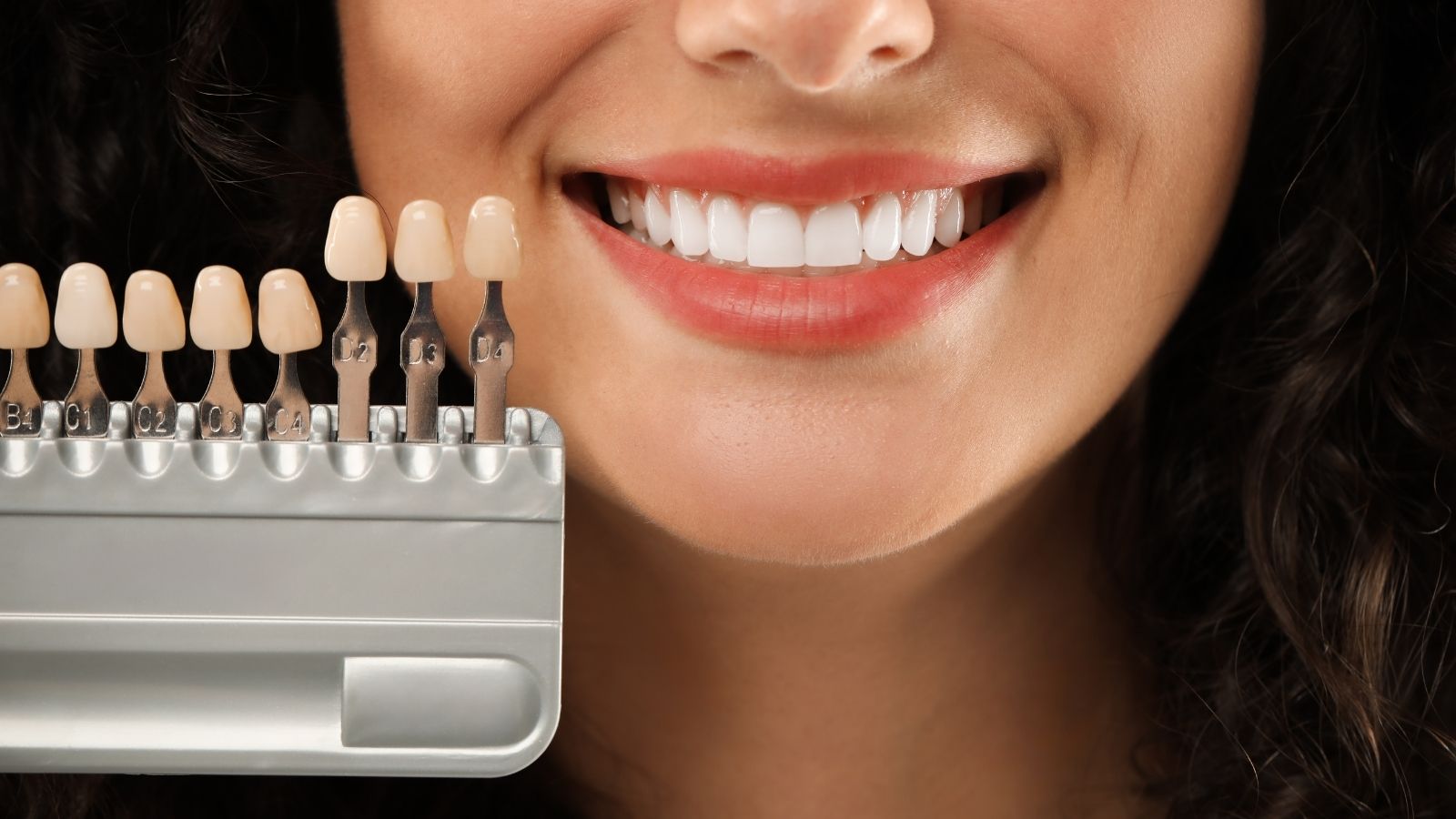
At the heart of this treatment lies “porcelain.” The porcelain used mimics the way natural enamel refracts and reflects light almost identically. As a result, the smile achieved after treatment looks lively and natural, free from any artificial shine. Their thickness is often less than half a millimeter, which allows them to be applied with minimal damage to the tooth surface. In some suitable cases, veneers can even be placed without touching the natural tooth at all. In short, laminate veneers are a modern, conservative technique that aesthetically camouflages your teeth, giving them the desired shape and color.
The main characteristics of laminate veneers can be summarized as follows:
- Ultra-thin porcelain shells individually crafted for each patient
- Applied only to the visible front surface of the tooth
- Require very minimal removal of natural tooth enamel
- Primarily aimed at improving aesthetic appearance
- Permanently bonded to the tooth using special adhesives
Which Aesthetic Problems Do Laminate Veneers Solve?
Laminate veneers act like a “joker” solution in aesthetic dentistry and can effectively address many cosmetic issues. Although everyone’s smile and expectations differ, there are certain conditions where this treatment is most frequently preferred and produces highly successful results. If you are dissatisfied with certain details of your smile, veneers may be the ideal solution for you.
The main aesthetic problems that laminate veneers can correct include:
- Persistent discolorations that cannot be removed by teeth whitening
- Unwanted gaps between the front teeth
- Worn, shortened, or aged tooth edges
- Small fractures or cracks caused by trauma
- Congenital or acquired shape deformities
- Mild misalignments that do not require orthodontic treatment
- A desire for a whiter, more symmetrical, and attractive smile
In particular, veneers provide permanent whiteness for gray or brown teeth caused by antibiotic use or root-canal treatment, which do not respond to traditional whitening methods. Similarly, gaps between teeth (known as diastemas) can be closed aesthetically by simply adjusting veneer width — without any damage to the teeth. This makes veneers a great alternative to lengthy orthodontic treatments.
Am I a Good Candidate for Laminate Veneer Treatment?
Although laminate veneer treatment produces stunning results, it may not be suitable for every mouth or situation. The success and longevity of the treatment depend directly on proper patient selection. So who achieves the best results, and who should consider other alternatives?
Ideal candidates for laminate veneers typically share the following characteristics:
- A healthy mouth free of active decay or gum disease
- Good oral hygiene habits, including regular brushing and flossing
- Adequate, healthy enamel surface for bonding the veneer
- Mild to moderate aesthetic concerns that can be corrected
- Realistic expectations regarding the treatment results
If you meet these conditions, you are most likely a good candidate for laminate veneers. However, some cases may require preliminary treatments or may not be suitable for veneers at all.
Situations where laminate veneers are not recommended or require special evaluation include:
- Uncontrolled or severe teeth grinding (bruxism)
- Severely misaligned teeth requiring orthodontic correction
- Weak or insufficient enamel for veneer bonding
- Large decayed areas or old fillings that cannot support a veneer
- Poor oral-hygiene habits
- Bad habits such as nail-biting or pen-chewing
In individuals with severe bruxism, excessive pressure on porcelain veneers can increase the risk of fracture. Even in such cases, if veneers are applied, wearing a protective night guard after treatment is essential. The best approach is to undergo a dental examination so your dentist can assess your individual condition before deciding on treatment.
Contact us for detailed information and appointments about treatments!
How Does the Laminate Veneer Treatment Process Work?
Laminate veneer treatment is a carefully planned and precise process that prioritizes patient comfort and is usually completed in several sessions. There’s no need to worry — every step is pre-planned and progresses with your approval. The process can generally be divided into three main appointments:
First Appointment: Consultation, Planning, and Design
This is the first and most important step, where we listen to your expectations and learn what kind of smile you envision. The main stages of this session include:
- A detailed discussion of your dream smile and expectations
- Comprehensive examination of your mouth, teeth, gums, and facial structure
- Taking photos and videos of your smile and facial expressions from multiple angles
- Creating a digital smile design using these records
- Testing the design on your teeth using a temporary material called a “mock-up” for a live preview
By the end of this session, you will have a clear idea of how your new smile will look once the treatment is complete. You can request changes to the design, and everything proceeds only with your approval.
Second Appointment: Preparation and Impression
After finalizing your smile design, the next step is to prepare the teeth and take impressions for the laboratory. The main stages of this session include:
- Gently removing about 0.3–0.7 mm of enamel from the front surfaces of the teeth
- Taking precise digital or conventional impressions of the prepared teeth
- Selecting the porcelain shade that best matches your existing teeth and skin tone
- Placing temporary veneers to protect the teeth and maintain aesthetics until the permanent veneers are ready
After this session, you can continue your daily activities normally. Your impressions are sent to skilled technicians who will custom-craft your porcelain veneers. This process usually takes 7–10 days.
Third Appointment: Bonding and Final Touches
This is the final step — the moment you receive your new smile. The porcelain veneers produced in the lab are permanently bonded to your teeth.
- Removal of temporary veneers and cleaning of the teeth
- Trial fitting of the permanent veneers to check color, shape, and fit
- Preparation of tooth surfaces with special gels before bonding
- Permanent bonding of the veneers using strong resin adhesives
- Curing the adhesive with a special light to ensure perfect integration
- Cleaning any excess cement, checking bite alignment, and final polishing
At the end of this session, when you look in the mirror, you’ll see the beautiful smile you previewed during the planning stage. About a week later, a short follow-up visit ensures everything is functioning perfectly.
What Are the Advantages of Laminate Veneers?
There are many reasons why laminate veneers are among the most popular treatments in aesthetic dentistry. This procedure not only provides a beautiful smile but also offers numerous technical and biological benefits.
The main advantages of laminate veneers include:
- Excellent aesthetics and natural appearance thanks to enamel-like translucency
- Minimally invasive procedure that preserves maximum tooth structure
- High resistance to staining from coffee, tea, or smoking
- Long-lasting color and brightness stability
- Biocompatible material that harmonizes perfectly with gums and causes no allergies
- Durability comparable to natural enamel
- Achieves a striking smile transformation in just a few sessions
Among these advantages, the most significant is undoubtedly their natural appearance. A well-made veneer is nearly indistinguishable from a natural tooth. The semi-transparent structure of porcelain allows a subtle reflection of the underlying tooth color while masking imperfections, creating a vibrant and healthy smile without an artificial look. Moreover, minimal enamel removal ensures biological health and preserves the tooth’s longevity.
Contact us for detailed information and appointments about treatments!
Are There Any Risks of Laminate Veneer Treatment?
As with any medical procedure, laminate veneer treatment carries some potential disadvantages and risks. However, don’t worry — with proper planning, precise application, and careful aftercare, these risks can be easily managed and minimized.
Possible disadvantages and risks to know before treatment include:
- Irreversible process since a thin layer of enamel is removed
- Risk of chipping or fracture under hard impact or excessive force
- Higher initial cost compared to other aesthetic alternatives
- Temporary sensitivity to hot or cold after the procedure
- If fractured, cannot be repaired — must be replaced entirely
- Color cannot be altered later by whitening treatments
The most important point to note is that the procedure is irreversible. Once you have veneers, those teeth will always require a covering. Therefore, it’s important to make an informed decision. The risk of fracture usually results from bad habits such as nail-biting, chewing on hard objects, or untreated bruxism. Avoiding these habits — and wearing a night guard if necessary — almost completely eliminates the risk.
How Long Do Laminate Veneers Last and How Should They Be Cared For?
One of the most common questions from our patients is how long their new smile will last after such a meticulous investment. Laminate veneers are not “lifetime” restorations, but with proper care, they can maintain their beauty and function for many years. On average, well-maintained veneers last 10–15 years, and in many cases even over 20 years.
So, how can you extend the lifespan of your veneers? The same way you care for your natural teeth — no special or complex routines are required.
The basic care rules for your veneers are as follows:
- Brush your teeth at least twice a day with a soft-bristled toothbrush
- Use dental floss daily to prevent plaque buildup between teeth
- Choose non-abrasive toothpaste to avoid scratching the porcelain surface
- Avoid excessive force such as cracking nuts, chewing ice, or opening packages with your teeth
- If you have a grinding habit, use the night guard recommended by your dentist
- Visit your dentist for a check-up every six months
Remember, porcelain itself does not decay, but the natural tooth underneath and surrounding gums can still become diseased. Therefore, maintaining oral hygiene is the key to preserving not only your veneers but your overall oral health. During regular check-ups, your dentist will examine veneer margins and the underlying tooth health to detect and prevent any potential issues early.
What Are the Main Differences Between Laminate Veneers and Zirconium Crowns?
In aesthetic dentistry, the two most popular materials associated with “veneers” are laminate and zirconium. However, these treatments differ completely in application and purpose and are often confused. To choose the most suitable option, it’s essential to understand their key differences.
In the simplest terms, a laminate veneer is like a cosmetic “make-up,” whereas a zirconium crown is like a protective “helmet” that completely covers the tooth:
The main characteristics of laminate veneers are:
- Covers only the front surface of the tooth
- Requires minimal removal of tooth tissue (conservative)
- Focuses primarily on aesthetics; strength is secondary
- Highly translucent, providing the most natural result
- Usually used for aesthetic corrections of front teeth
The main characteristics of zirconium crowns (full crowns) are:
- Completely encases the tooth like a cap (360 degrees)
- Requires more reduction from all tooth surfaces
- Designed primarily for strength and function, though also aesthetic
- Used to protect severely damaged, root-canal-treated, or fractured teeth
- Suitable for both front teeth and back teeth exposed to heavy chewing forces or for bridges